
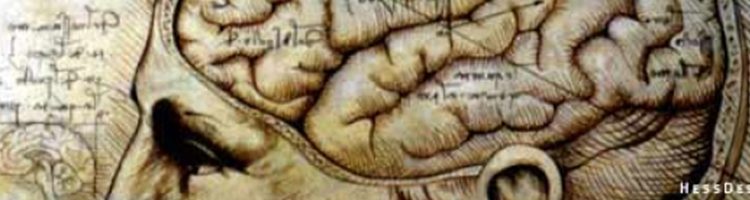
Rudimenti di disegno

Why is there an Italian subtitle? These essential design principles were rediscovered and further developed during the Italian Renaissance.
Most of these Drawing and Design systems pre-date the Renaissance, but for us, it is our most tangible historical resource.
What exactly are Rudiments?
Rudiments are the fundamentals, the building blocks, the essential elements, and the founding principles of traditional drawing and design systems. They are the kindergarten of visual literacy.


These venerable drawing and design systems have been used by master draughtsman for a myriad of centuries. It should be noted here that the Renaissance elevated the craftsmen to artist status. They became, architects, engineers, inventors, chemists, botanists, biologists, mathematicians, and they occasionally drew, painted, and sculpted.
In the past several decades, this time-tested process has been misrepresented and distorted to the point that it has no relationship to the original. Current trends are reversing the process and turning the artist back into a craftsman, much as they were in the ‘dark ages.’
It is a common misconception that Quattrocento masters worked faithfully from nature; however, this is not the case. They were certainly observant but never relied solely on observation for their visual information.
On the contrary, they used their minds to interpret, imagine, and invent. They recognized drawing not as an imitation of nature but as an illusion of it.

Enter Disegno: the Italians use ‘Disegno’ to refer to both drawing and design. The Renaissance was the rebirth of civilization when people took great interest in the universe and their relationship to it. In a sense, the universe became their mistress, and they would spend the next several centuries trying to uncover her mysteries.
They did not see nature as something to imitate; they viewed it as something to investigate. It was not a matter of mere copying; it required making decisions about how it was designed. They established an intimate relationship with nature and its underlying geometry..


In the Renaissance, draughtsmen didn’t simply replicate what they saw; rather, they depicted their understanding of the subject. They utilized their observations to inform their thought process, allowing their hands to translate their visual interpretations. So, essentially, drawing became a form of thinking.
Because the creative mind needs a series of guideposts to keep them from aimlessly wandering through the wilderness, we have developed the acronym
READING – Relearning the universe in visual terms; Point, Line, Plane, & Form
UNDERSTANDING – Visual Literacy
DISEGNO – Drawing and Design are inseparable
INTENT – The five levels of intent: Imitation, Information, Interpretation, Intuition, and Invention.
MASSING – The mass conception and organization of forms in space.
EMPHASIS – The empirical ordering of design elements.
NAVIGATION – Orchestration and organization of visual symbols.
TRANSLATION – Transforming the visual language into a viewer-friendly idiom.
SYNTHESIS – Transform the parts into a unified whole.
R.) READING U.) UNDERSTANDING D.) DISSECTING I.) INTERVALS M.) MASS E.) EMPHASIS N.) NAVIGATION T.) TRANSLATION S.) SYNTHESIS
R.) READING_Reading the universe in visual terms. The Linear Visual Language; Point, Horizontal Line, Vertical Line, and Curved Line. Square, Circle, Triangle (Flat Shape Perception)
Lesson 1: Analysis of the Greek Vase in Outline
U.) UNDERSTANDING_Defining the visual language in terms of Volume. The Volumetric Visual Language; Point, Line, Plane, and Form. Cube, Pyramid, Cone, Cylinder, Sphere, (Mass Conception)
Lesson 2: Cube Is The Mothership – Height, Width, and Depth – H.W.D.
D.) DISSECTION_Deconstruction and re-construction of nature.
Lesson 3: Cube As Mothership Cont. Dissecting Basic Form Units
I.) INTERVALS_Navigating space using the triumvirate of Intervals, Intersections, and Interlocks.
Lesson 4: Introduction to the Human Form
M.) MASS_The mass conception and organization of forms. (Rotation & Orientation)
Lesson 5: Volume & Value
E.) EMPHASIS_Empathy with the Universal Truths. The empirical ordering of design elements. (Proportion, Position & Prominence) Atmospheric Perspective
Lesson 6: Proportion, Position, Perspective and Prominence
N.) NAVIGATE_Overview of the Golden Ratio
Lesson 7: Divine Proportion
T.) TRANSLATION_Creating the illusion of volume on a flat surface. Giving you viewer the most relevant inFORMation about the object being translated into the visual language. If the viewer doesn’t understand what you are trying to say you are talking to yourself (
Lesson 8: Aspective View
S.) STRUCTURE_Geometric Conception of the head in multiple views
Lesson 9: Structure of the Head
- * ‘Perception is not a passive recording of all that is in front of the eyes, but is a continuous judgement of scale and colour/value relationships.’ – Johannes Itten – (1983) [1970]
These guideposts act as a spacial map not as a pre-determined linear route. Visual precepts implicitly contain space and motion, i.e., every element in the universe is moving. Verbal descriptions still the thought process with a pre-conceived snap-shot. (Red Apple)

These axioms or canons that have helped navigate the journey toward mastery centuries before the quattrocento.
Mastering any art form (or anything) begins and ends with building a solid foundation of fundamental design principles. These ‘Rudimentary’ concepts need to become an inherent part of one’s subconscious.
R.U.D.I.M.E.N.T.S.
(R)EADING
Let us start with R the 3R’s to be exact.
Reading, Riting, and Rithmatic.
Learning to draw requires learning to read and write and think in a different idiom, i.e., the visual language. Just as we can think verbally we can also think visually.
The visual idiom is not a language made up of the letters, words, sentences, paragraphs, stories, and novels. The visual dialogue is made up of points, lines, planes, forms, figures, and compositions.
DEMO: The Visual Language_Points (graphic and geometric) replace
Groups of forms become figures, and groups of figures evolve into compositions.
Relearning to perceive your surroundings in visual terms involves rethinking almost everything you thought you knew.
Points are lines on end and lines are the edges of planes, and planes only exist as the skin of forms.
GESTALT: A brief overview of the German word ‘gestalt’ and what it refers to in German will cover a great deal of ground in our understanding of Visualization versus Verbalization. The multiple meanings of gestalt include; shape, form, and figure among others. As one would or should demise is that it is synonymous with ‘gesture’. The often erroneously quoted ‘ The Whole is Greater Than the Sum of its parts.’ Is it not only wrong it is misleading.

Kurt Koffka’s quote more correctly translated is ‘ The Whole is other than the Sum of its Parts.’ ‘Greater than’ would indicate that the ‘parts’ have names and when you put those parts together you have something bigger, better or ‘greater’. In plain English ‘The Whole is Greater than’ has a totally different meaning than ‘The Whole is Other than.’
FORGET THE NAMES OF THINGS
Words like ‘apple’ are a hindrance to the artist because they come with pre-conceived verbal baggage.
The draughtsman replaces ‘verbal names’ with ‘visual aspects.’
The visual aspects of an object are its universal ‘ESSENTIAL’ truths, i.e., size, shape, form, position, direction, axis, orientation, rotation, et.al. The emphasis shifts from what it is to where it is and what it does.
The essential truths about ‘apple’ are that it is a ‘spherical geometric solid that has a tessellated surface the reflects light rays onto to retina that is perceived by one’s brain as have a variety of shapes the make up the form and give off a number of hues in various values, temperatures, and intensities. The least of which may be its verbal local color.

These design systems rely heavily on eye, mind, hand coordination plus an understanding of relevant geometric principles. Coordination of these three dispirit elements takes considerable time to develop and we need to start focusing on them early on. This starts with an exercise program that needs to be a daily ritual. Your personal eye, brain, hand wellness program.
EX. 1. Eye, brain, hand, Health

Musicians are keening aware of taking care of their hands and have sets of isometric hand exercises that strengthen and protect their hands against injury. They also have sets of scales they practice with and without instruments.
Dancers do stretching exercises for strength, flexibility and to prevent injury.


Singers have vocal exercises to loosen and flex their vocal cords.

Poets have visualizing activities that get them into the appropriate mental state to create.
The Draughtsman needs to treat its creative instruments with the same care and respect as they are accorded in other art forms. One should have a set agenda of exercises to train these three significant components utilized in the design making process — their eyes, their brain, and their hands. To get these three components to coordinate their respective roles in the process is no simple task.

EX. 1.Mind Hand Coordination_Arm, Wrist, Hand, Finger, Joint Exercises. (Fist n spread, Pray push, joint pulling/popping, Finger Flexing., Supination/Pronation) Chinese Baoding, Tai Chi/Yoga hand exercises.


EX. 2.The Maze_Horizontals, Verticles, and intervals. .
EX. 3. The Z’s_Diagonals, Intervals, and weight.


EX. 4. Freehand Ellipses

EX. 5. The River_Alternating, Articulating. Note: Rivers have banks as well as channels.
EX. 6. The Cartesian Grid_Intervals, Horizontals, Verticles, Diagonals, and Curvilinear. (Quadrants)


“Genius is 2 percent inspiration and 98 percent perspiration.” – THOMAS EDISON –
What this famous quote fails to convey, is that he spent 98 percent of his time coaxing that 2% of inspiration out of hiding.

Edison is also quoted: “I haven’t failed, I have just found 10,000 ways that won’t work.”

“Inspiration exists, but it has to find you working.” – PICASSO – The bottomline is that creativity needs to be the endgame.
“Perspiration without inspiration is just sweat.”

Buying the proposition that long hours of tedious tonal trancing, senseless shape aping and mindless mimesis is of any intrinsic aesthetic value is a fool’s mission. Learning to capture the likeness of things is a rite of passage, nothing more, nothing less.
We used to present this part of our program as an overview.
L.I.F.E., which consisted of Language, Intent, Form, and Expression.
We have come to realize the need to expand on these fundamental aspects and that they are essential to understanding rudimentary drawing and design systems, i.e., DISEGNO.
Without this solid foundation on which to build one skill-sets, it is easy to conflate rendering with Drawing and Designing and Technique with art.
RENDERING IS NOT DRAWING AND THE CRAFT OF PICTURE MAKING IS A FAR CRY FROM PAINTING.

Leave a Reply