
Keeper of the Keys
-

munich school_Herman Hartwich
Posted on
Herman Hartwich_ Born July 8, 1853, in New York City_Died March 8, 1926 in_Munich. Herman was a German-American landscape and genre painter. He was initially taught how to paint by his father and later studied painting at The Academy of Fine Arts Munich_1881 to 1884. Much more than meandering through the history of Western Painting, this
-

Post Munich School_Hans Purrmann
Posted on
Hans Marsilius Purrmann _April 10, 1880_April 17, 1966_After studying with Franz von Stuck at the Munich Academy Hans moved to Paris where he became a friend and student of Henri Matisse whom he set up a painting school with. Typical of Purrmann’s style are colourful, sensitively painted landscapes, still lifes and portraits.
-

Munich school_hugo Kauffmann
Posted on
Hugo Wilhelm Kauffmann_7 August 1844_30 December 1915 Munich School German Painter. He obviously liked to hang out in taverns and certainly seemed to have been influenced by the Dutch Genre Painters notably Franz Hals. Kauffmann is known mainly for his folksy genre paintings, often set in taverns. Once again these paintings were not highly thought of
-
MUNICH SCHOOL_WILHELM VON DIEZ
Posted on
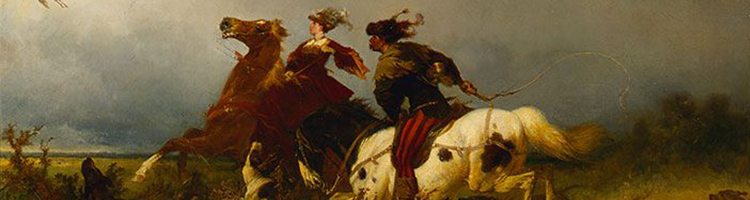
Albrecht Christoph Wilhelm von Diez Born 17 January 1839, Bayreut_ Died 25 February 1907, Munich. Wilhelm was a vital member of the Munich School Painters in the 19thc. In 1855, he attended the Royal Academy of Fine Arts in Munich for a short time under Karl von Piloty. He was mostly self-taught, which helps to explain
-

Munich School_POLYCHRONIS LEMBESIS
Posted on
Polychronis Lembesis was born on 18 December 1848 on the island of Salmina, located near Athens. As a little boy, he spent much time in the monastery of Faneromeni, painting Byzantine icons. He initially studied at the Athens School of Fine Arts and, in 1875, continued his studies at the Royal Academy of Fine Arts Munich.
-

The Goodall Artistic Legacy
Posted on
Starting with Edward Goodall 1794-1870, there is a linage of Goodall Artists in England until 1982. Edward Goodall was born near Leeds, Yorkshire, where his Quaker uncle raised him. He went to London in his early teens and began as an apprentice to a printer and learned the art of steel line engraving. He became Edward
-

19thc french academy_Théodore Ralli
Posted on
The latter half of the 19thc and first quarter of the 20thc diverse things happening in different parts of the Globe. Here we have a Painter trained in the Ecole des Beaux-Arts French Academic manner which painted things that looked like things. They were primarily recorders of Nature. Painting subjects largely dictated by the government.
-
Chardin • Real Realism
Posted on
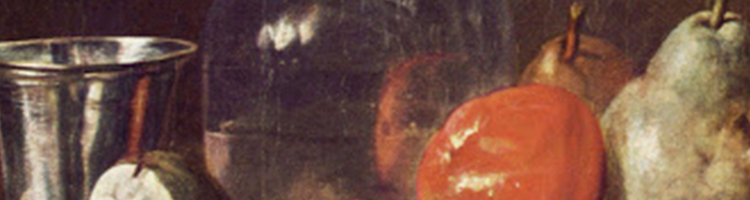
Jean Siméon Chardin was born in 1699 and came to manhood a when the Rococo of Watteau, Fragonard, and Boucher was the style de jour. Rococo rivaled in decadent frivolity, depicting erotic nudity, romantic trysts, and carnality. The reality we associate with painting how we see in the manner of Velasques, Vermeer, and Chardin was
-
ACADEMIC XENOPHOBIA
Posted on
Once upon a time, the French Academy dictated what was defined as Fine Art and what was not. If one did not follow the Academies rules, he was considered unskilled, untalented, and scorned by the Academy. We use ‘He’ here because the official Academy did not admit women. These regulated regurgitated governmental dictums held sway
-
EACH TO THEIR OWN DEVICES
Posted on
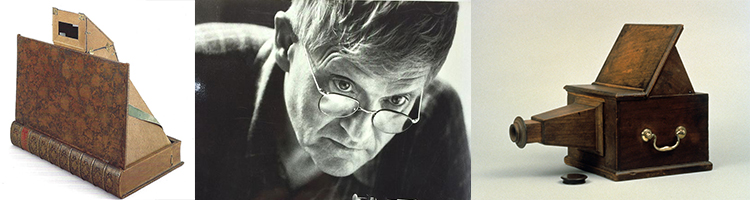
In his book ‘Secret Knowledge’ Hockney and Professor Martin Kemp, discuss known visual procedures of past Masters. This evidentiary material allows the reader to arrive at their own conclusions. There is more than enough scholarly evidence that Vermeer, and many others, used a form of ‘Camera Obscura’ or curved mirror as a visual aide in