
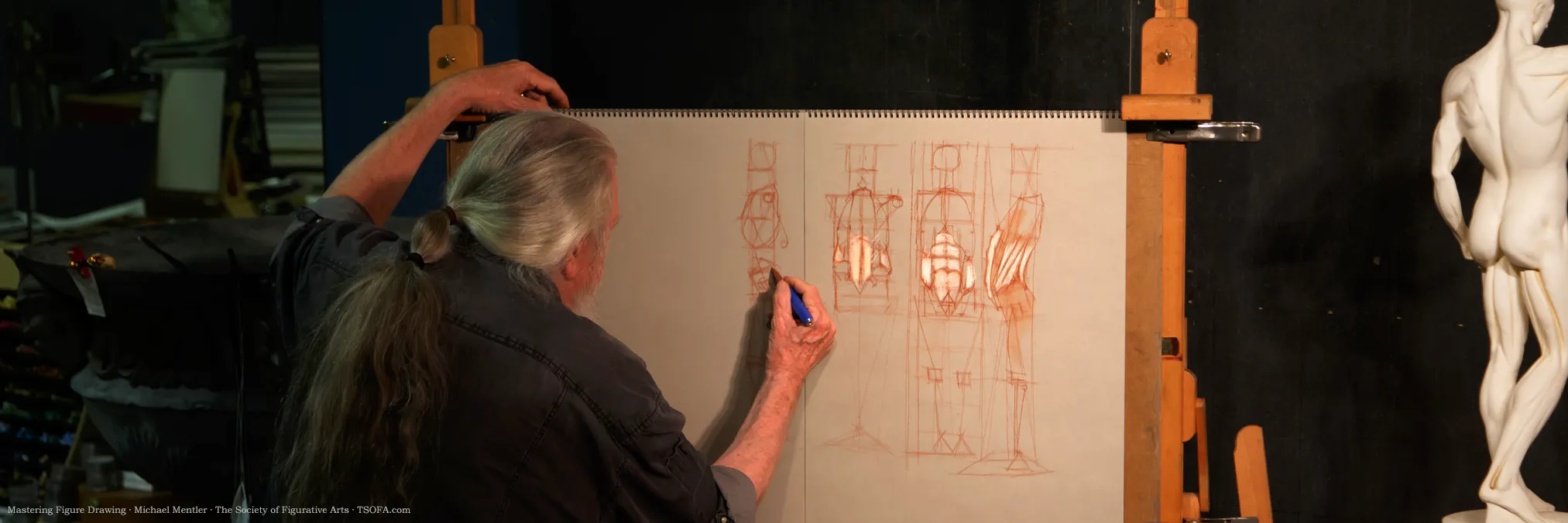
Are you ready to take your figure drawing to the next level? Learn the Mentler Methode figure structure approach online! No disks, no long flights, just press play and dive in at your own pace!
Join us every Friday for a figure drawing session from a model. We will start with short warm-up poses and work our way to longer poses. This is a perfect sequence to work on your gesture!
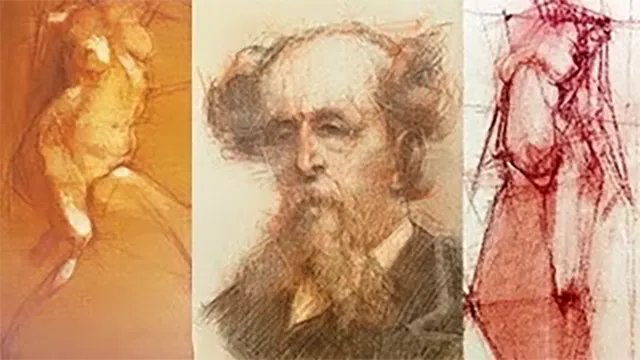
Current Schedule
Every Wednesday
Mentored Session with Michael Mentler
Drawing from Casts, no live model
10:30am – 1:30pm
Cost: $30 per session
Every Friday
Drawing from nude model, short and/or long pose
10:30am – 1:30pm
Every First Saturday of the Month
Drawing from nude model, short and/or long pose
10:30am – 1:30pm
Upcoming Labs & Workshops


Physical Materials
Own a real physical disk or book that will last a lifetime instead of fleeting digital downloads.

PLAN – Figure Drawing Blu-ray

The Book of Bones
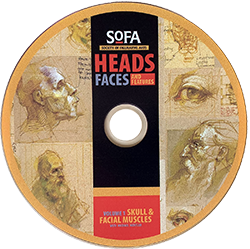
Heads, Faces, and Features DVD
Art by Michael Mentler
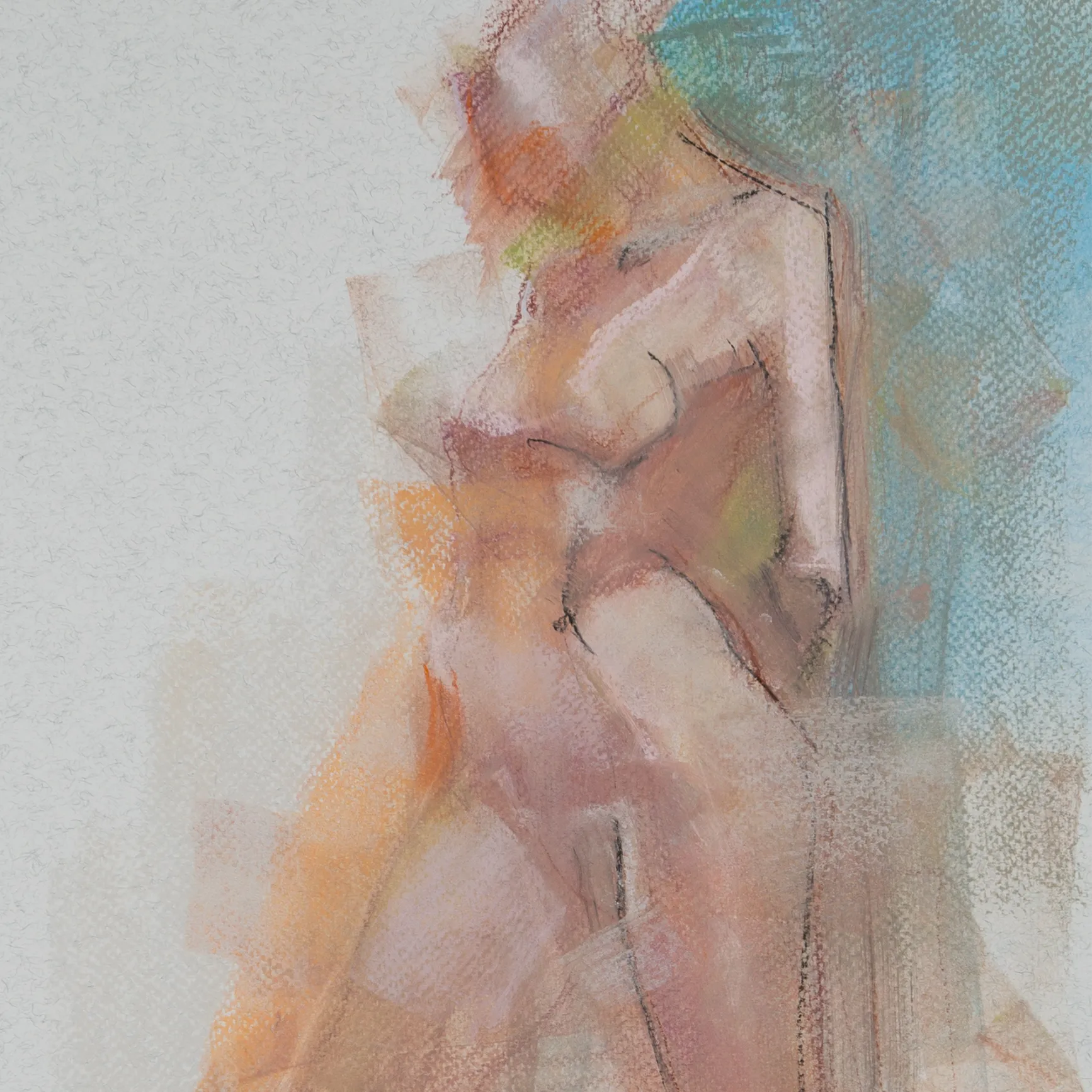
Visit studio owner’s art gallery. A number of original drawings and paintings by Michael Mentler are available for purchase and ready to be added to your collection.


Latest Posts
-

RAPHAEL PARIS CLASSIC BRUSHES
Published on
TSoFA has been examining the characteristics of hog bristle brushes for the professional oil painter. These tests have taken several weeks, here are the observations. The top manufacturers of professional-grade hog bristle brushes, in no particular order, are Escoda, Raphael, Isabey, and Da Vinci. We have included other manufacturers in the past, but recent acquisitions
-
DISEGNO
Published on
The Society of Figurative Arts uses the word Disegno to refer to both Design and Drawing much as the Renaissance Italians did. They recognized Drawing as classical design, a position we share. The system of Disegno used by Leonardo were discovered in the writings of Vitruvius 80-70 BC (The first Roman Architect) lead to Leonardo’s
-

RIGHT SIDE – WRONG HEADED
Published on
The word brain was left off intentionally because this book cuts ones brain out of the equation. The premise of Ms. Edwards notorious little book is that the Right-Side of our brain is not cluttered up with analytical, reasoning, decision-making functions, i.e., the thinking, creative stuff like the left-side is. (Never mind that the science
-

R.(U.)D.I.M.E.N.T.S.
Published on
(U)NDERSTAND As opposed to popular belief, the master draughtsman doesn’t copy what they see; they capture the gestalt, the simplest known visual aspects of the subject at hand. Drawing/design is, at its core, a creative decision-making process. The first task is to identify and quantify the model’s visual aspects, followed by a determination of which
-
RUDIMENTS OF DRAWING & DESIGN
Published on
Rudimenti di disegno Why is there an Italian subtitle? These essential design principles were rediscovered and further developed during the Italian Renaissance. Most of these Drawing and Design systems pre-date the Renaissance, but for us, it is our most tangible historical resource. What exactly are Rudiments? Rudiments are the fundamentals, the building blocks, the essential
-
THE PLUMMET OF TRADITION
Published on
Sight-size and the Bargue debacle do not align with the main-stream of traditional artistic practices. There is an inherent danger that over absorption in this kind of academic study neglects the development of the students’ intuitive, creative abilities. It is the possession of said abilities, which will enable them to become an artist. IMITATION is