
Articles



All Articles
-
CHOOSING THE RIGHT PATH
Firstly one must decide if the objective is to create or imitate; Creativity is a singular lonely activity as opposed to the more comfortable arena of imitative conformity. Homo sapiens are all born with tribal instincts, what differentiates us is the size of the tribe we feel comfortable in, and the objectives of that tribe.…
-

G.(R.)A.V.I.T.Y. Rhythms
In 1349 a group of Florentine artists formed a society for the study of the chemistry of colors, the mathematics of composition, etc., and that among these studies was the science of motion. Rhythm has been the movement of the Universe since time begin. There is rhythm in the movement of the sea and tides…
-

G.R.A.V.(I.)T.Y. INCIDENTS
INCIDENTS along the boundary of the enclosure let the draughtsman know something structurally significant has occurred. An INCIDENT is taking place that requires a determination from the draughtsman as to its cause. These Incidents result from Intersections, Interlocks, Insertions, Intervals or a combination thereof. They need to be understood by the draftsman; they describe how…
-

PAINTERS HISTORY OVERLOOKED
The layman is often baffled that some of the painters they most admire seem to have fallen through the cracks of history. It is beyond their comprehension that painters who could paint so realistically could so easily be dismissed. They are agas when they also learn that if any of these ‘stalwarts’ made it to…
-
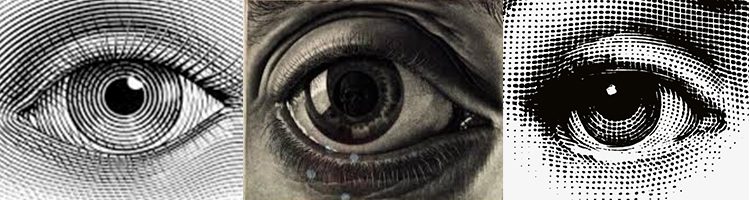
A COUPLE OF OBSERVATIONS ABOUT OBSERVATION
Observational skills are an essential aspect but not the most paramount by far. The master draughtsman never draws what they see, they draw what they know to look for. The master draughtsman doesn’t shade to turn form, they SHAPE it with planes to create form. They don’t copy nature they interpret it. Their skill-sets are…
-
Portrait drawing process by Michael Mentler
Michael Mentler is the master behind the Society of Figurative Arts, subscribe to his YouTube channel for drawing process videos and tips!
-
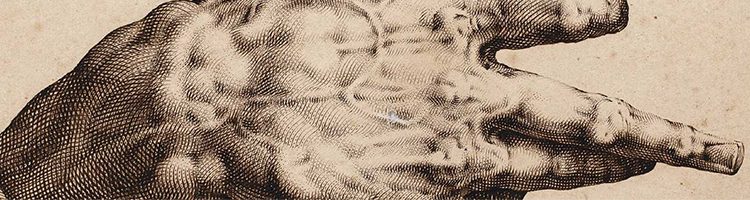
THE TRINITY OF MASTERY
Core Academic Training There are three areas where the apprentice has the most to learn. They are: drawing from life, drawing masterworks, and drawing from imagination. The apprentice must include a third of each in their studies as the world’s great masters have done for over six centuries. Practitioners in past centuries studied and analyzed…
-

ARC AND ‘CONSERVATIVE REALISM’
Being an advocate of skill-based training and having spent several decades in the pursuit of those skills I am diametrically opposed to those who would purposefully try to dumb-down as many non-Socratic thinkers as possible in the name of ‘art’. The first glaring problem with ARC’s philosophy is that they have none. Philosophy would denote a…
-
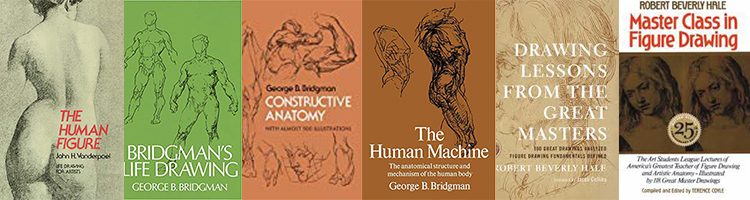
ARCHITECTONIC DISEGNO
The apprentice’s advancement requires a careful study of figure structure, as elucidated by Richer, Bridgman, and Hale, familiarizing themselves with the bony structure of the skeleton, and the location, origin, insertion, and function of the muscles. FIGURE STRUCTURE Architectonic Disengno The Architectural Design and Structure of the Human Form The skeletal system is compliant with…
-
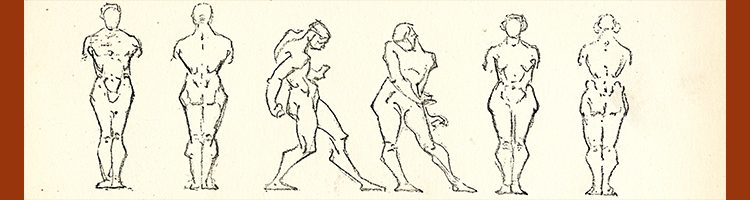
THE FOUR ELEMENTS OF MASS CONCEPTION
THE FOUR ELEMENTS OF MASS CONCEPTION The apprentice should make a daily practice of drawing cubes, spheres and cylinders. In the architectonic drawing, all other forms are composed of these forms or parts of them. The master draughtsman can give the illusion of any complex subject by combining the simple forms or parts of the…