
Academic Training
-
DRAWING VS Craft
Posted on
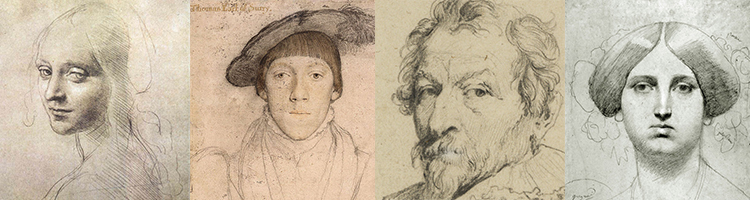
First, one needs to understand that drawing is more than a craft; it is an integral part of the plastic arts. They need to understand what constitutes art and what does not. They need a strong overview and a game plan in order at achieve Mastery. They need to understand the Five Levels of Intent…
-

Chardin • Real Realism
Posted on
Jean Siméon Chardin was born in 1699 and came to manhood a when the Rococo of Watteau, Fragonard, and Boucher was the style de jour. Rococo rivaled in decadent frivolity, depicting erotic nudity, romantic trysts, and carnality. The reality we associate with painting how we see in the manner of Velasques, Vermeer, and Chardin was
-
The Twilight of Contour
Posted on
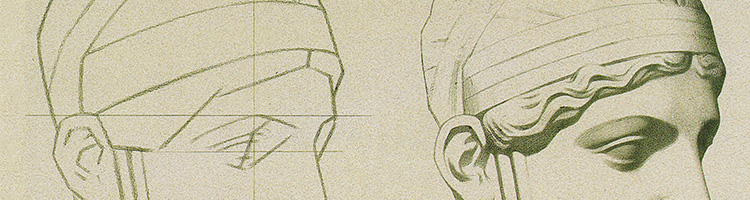
Let us begin with what is known as the Boston School of Painters. Key figures in the Boston School were Edmund C. Tarbell, Frank Weston Benson, and William McGregor Paxton, all of whom trained in Paris at the Academie Julian and later taught at the School of the Museum of Fine Arts. Other painters associated
-

ACADEMIC XENOPHOBIA
Posted on
Once upon a time, the French Academy dictated what was defined as Fine Art and what was not. If one did not follow the Academies rules, he was considered unskilled, untalented, and scorned by the Academy. We use ‘He’ here because the official Academy did not admit women. These regulated regurgitated governmental dictums held sway
-

EACH TO THEIR OWN DEVICES
Posted on
In his book ‘Secret Knowledge’ Hockney and Professor Martin Kemp, discuss known visual procedures of past Masters. This evidentiary material allows the reader to arrive at their own conclusions. There is more than enough scholarly evidence that Vermeer, and many others, used a form of ‘Camera Obscura’ or curved mirror as a visual aide in
-

AND APPLE A DAY
Posted on
We are often asked the difference between Realist and Representational Art. The image to the left is, of course, a photograph. Photographs are what realist art is compared to. This illustration of an apple is an example of what one might find in a vintage seed catalog. It actually describes the apple in terms of
-

THE TRINITY OF MASTERY
Posted on
Core Academic Training There are three areas where the apprentice has the most to learn. They are: drawing from life, drawing masterworks, and drawing from imagination. The apprentice must include a third of each in their studies as the world’s great masters have done for over six centuries. Practitioners in past centuries studied and analyzed